

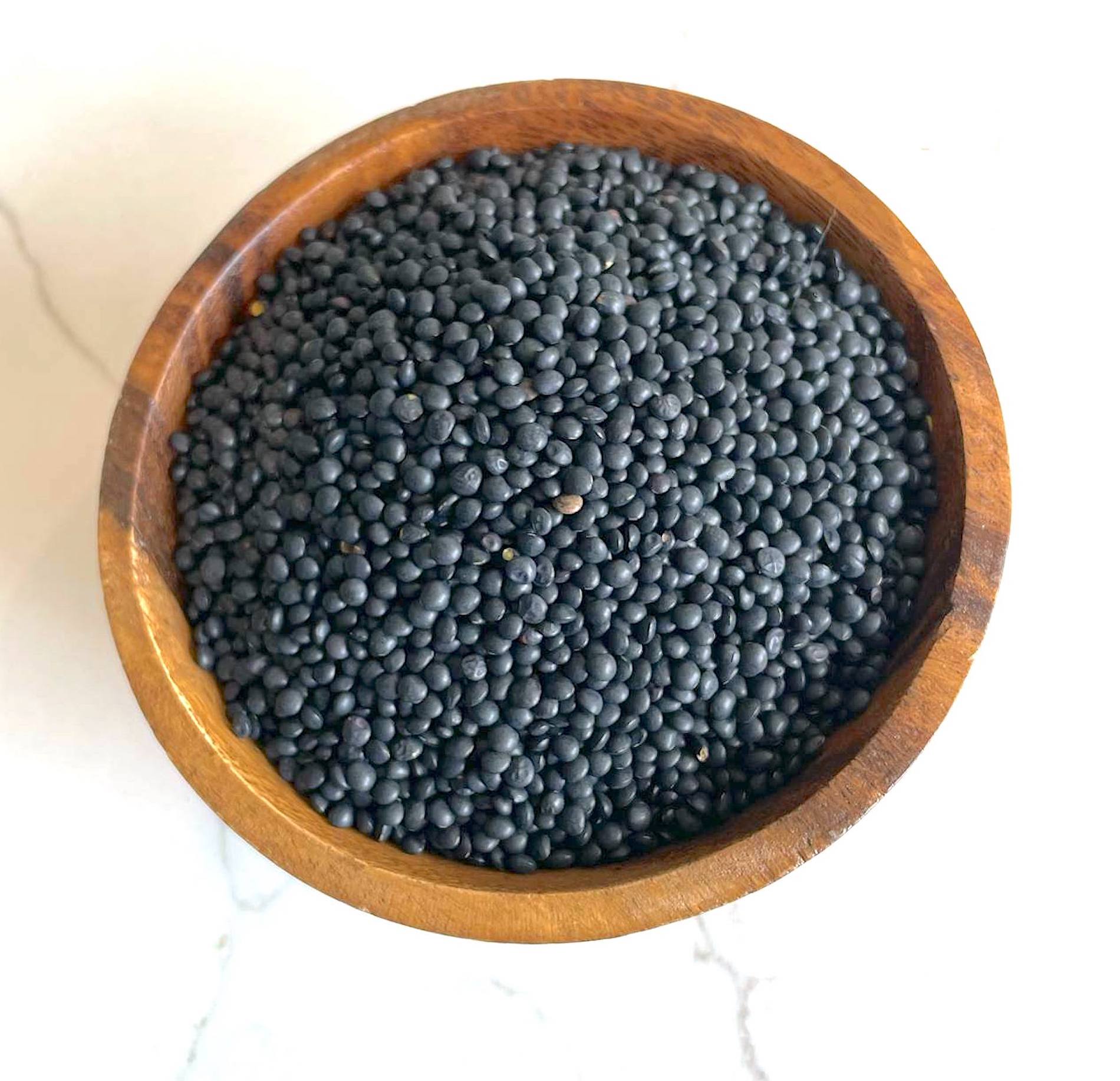
If you’re already an adventurous foodie who’s passionate about legumes in general, these tiny black heirloom sensations are a must try. For those who think that beans are alright, but don’t particularly enjoy lentils, black beluga lentils may change your mind.
A BRIEF HISTORY
Black lentils probably originated in the Middle East in the same general area where other lentil varieties originated, the Nile, Tigris, and Euphrates valleys. Lentils of all types are one of the oldest domesticated crops. But it’s not clear why or when green and brown lentils became the most popular lentils used in Western cuisine. Meanwhile, black lentils were all but forgotten until fairly recently. Today, these lovely wholesome little beans are grown in the cool dry plains of the US and Canada. But black lentils are among the New World’s most recent crops. They were introduced to North America for the first time in the mid 1990s by Timeless Seeds, a Montana based company, who correctly guessed that these attractive legumes might appeal to chefs and other gourmands.
HOW I DISCOVERED BLACK LENTILS
In the panicky buying spree which characterized the early days of the COVID-19 pandemic, many people were desperately stocking up on dried beans. It seems that I panicked later than most, because by the time I hit the dried bean section of my local grocery store, they were sold out of all dried beans except for black eyed peas and green split peas. Random!
Like just about everyone who follows a whole food plant-based lifestyle, I eat a lot of beans and I want as much variety as possible. The dried bean shortage I was seeing at the store was worrisome. Who knew how long this pandemic would last and how scarce food staples were going to become. I needed more beans! So I decided to go online and research mail order bean options and availability. That’s when I discovered Rancho Gordo, a California based heirloom bean company that still had plenty of beans in stock at that time. And not just any old beans. Rancho Gordo offered all sorts of colorful and interesting varieties of beans most of which I’d never heard of. They still do. I saw black caviar lentils for the first time on the Rancho Gordo website and ordered them immediately. That’s where I’ve been buying my black lentils ever since.

WHAT ARE BLACK LENTILS LIKE?
Also called beluga lentils, or caviar lentils, because of how they look before they’re cooked, these beans are versatile and convenient. Like all other lentils, they cook quickly without having to be soaked. Unlike other lentils, they’re shaped more like puffy little pillows than like saucers. When cooked, they lose some of the blackness, becoming more of a dark grayish brown. Compared to other lentils I’ve prepared, black lentils are denser after they’re cooked, less mushy. The density is great for some recipes, but may not be desirable for others. The taste is subtle, slightly nutty. Mostly I like the texture and how they look against light colored grains.
NUTRITIONAL PROFILE
Like other lentils, black lentils are a great source of fiber and folate. In fact, everything that’s beneficial to your health about pulses, the dried seeds of legume plants, also applies to black lentils. The main nutritional difference between black lentils and all other lentils is related to their uniquely dark color. Black lentils are a great source of anthocyanins, the water-soluble red, blue and purple plant pigments also found in berries and many other fruits and vegetables. Anthocyanins are powerful antioxidants that keep free radicals from damaging human cells. Green and brown lentils also have anthocyanins, but in much smaller quantities.
EVERYDAY COOKING WITH BLACK LENTILS
As I’ve mentioned, I like the way black lentils look against light colored grains. Once cooked, they become lighter in color but are still much darker than their green, brown or red counterparts. This creates a lovely contrast against brown rice, farro, bulgur wheat and barley, just to name a few grains. Black lentils need about the same cooking time as most grains. So a lot of times, if I’m making a grain to have as a side dish, I’ll throw in a handful of black lentils. They make my grains more interesting and I’m getting more pulses, a win-win.

BLACK LENTILS FOR SPECIAL DISHES
Sometimes black lentils elevate a recipe by by adding visual appeal and a dense compact texture that’s different from that of any other bean. This is especially true of recipes where lentils are being used as a meat substitute. Because they are darker and significantly less mushy, black lentils are often a better meat stand-in than green or brown lentils. My veganized version of Louisiana style dirty rice is a great example of a recipe where the unique qualities of black lentils shine.



Leave a Reply