
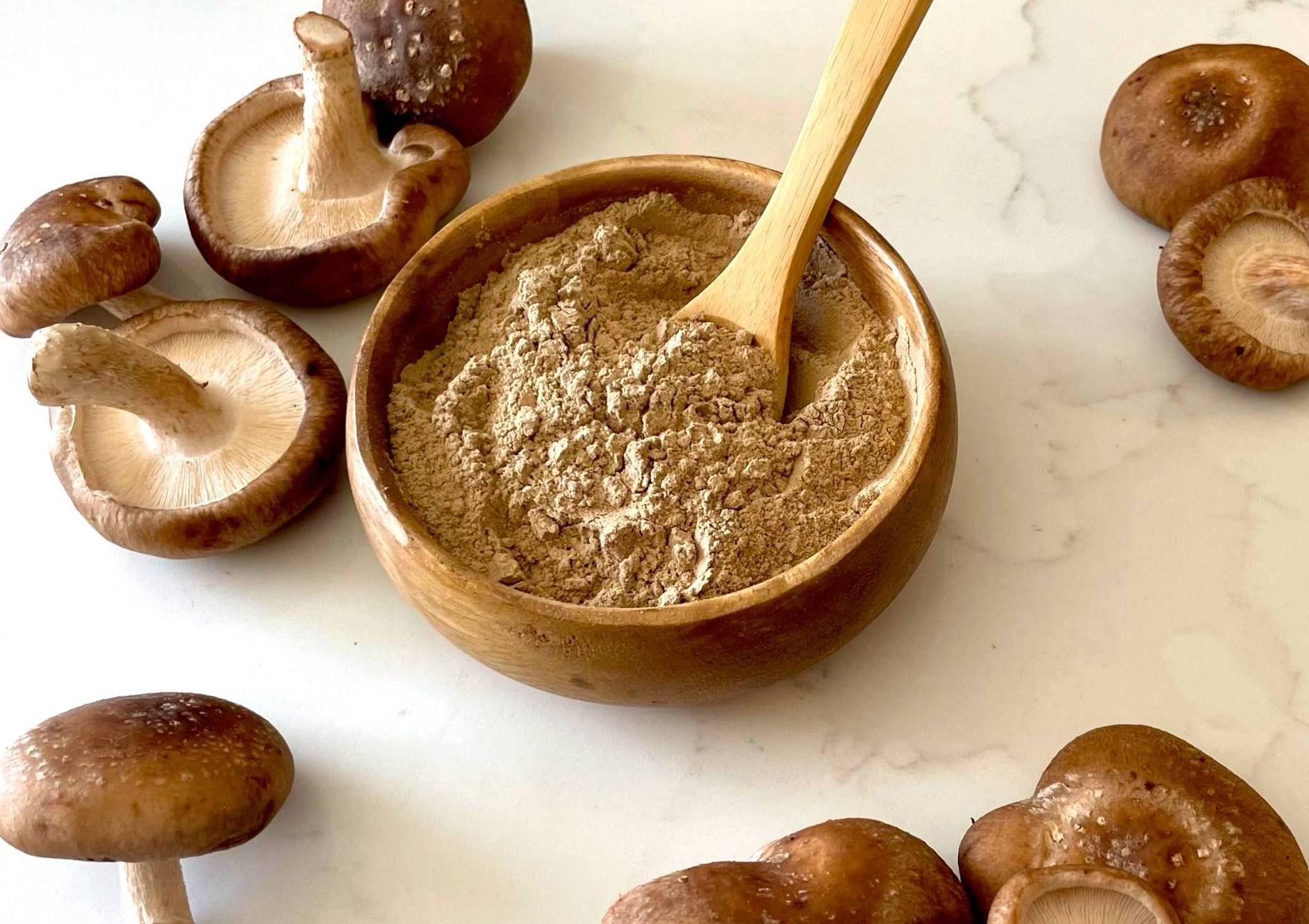
Shiitake mushroom powder enhances umami flavors in plant-based recipes. Culinary fungi are often prized for having a meat-like taste. Some of this meaty taste is also present in many mushroom powders. But the meatiness of shiitake mushroom powder is subtle. And this subtlety is what makes shiitake mushroom powder an exceptionally versatile ingredient that accentuates adjacent umami flavors without overpowering them.
A NON-PLANT PLANT-BASED FOOD
Mushrooms are a vegan and plant-based friendly ingredient, but technically they are not a plant food because fungi are not plants. Throughout much of Western history, scientists and lay people alike categorized mushrooms and other fungi as part of the plant kingdom. But in 1969 the fungi kingdom was officially classified as separate and distinct from the plant kingdom.
The scientific community decided to re-classify fungi as a separate kingdom from plants for three main reasons: (1) fungi lack chloroplasts, the oraganelles found in the vast majority of plants which allow them to nourish themselves; (2) fungi have a unique way of nourishing themselves which involves secreting digestive enzymes that then allow them to absorb nutrients from their surrounding; and (3) there is molecular evidence showing that fungi are more closely related to animals than to plants, having diverged early on from the evolutionary tree of life away from the plant kingdom.
Understanding the ways in which fungi differ from plants and their closer molecular relationship to animals may explain why they are such a valuable flavor enhancer in plant-based cooking. The unique properties of the fungi kingdom can also help explain why some specific fungi, like shiitake mushrooms, are better than others when it comes to the enhancement of adjacent flavors, and why dried powdered mushrooms can be better than whole fresh mushrooms for cooking.
A WFPB UMAMI ENHANCER
Shiitake mushroom powder is a rich source of guanylic acid, a fundamental component of all living cells essential to the creation of genetic materials like RNA and DNA. Generally speaking, foods derived from animals, fermented animal foods in particular, are more likely to have high concentrations of guanylic acid. But shiitake mushroom powder is a notable exception, and one that’s also considered whole food plant-based (WFPB) compliant.
During the drying and rehydrating processes involved in the creation and use of shiitake mushroom powder, a component called guanylate, present in whole shiitake mushrooms, becomes guanylic acid, a compound that intensifies the human experience of umami flavor in food. Guanylic acid works synergistically with other foods activating the umami flavor receptors in the tongue.
Many processed foods contain a similar ingredient called disodium guanylate which also works to intensify umami flavors and is usually used in combination with MSG. But while disodium guanylate is a highly processed food additive usually made from fermented tapioca starch, the guanylic acid in shiitake mushroom powder occurs in the context of a whole plant food—whole shiitake mushrooms—that has been minimally processed in the sense that nothing good has been taken out of the whole ingredient and nothing bad has been added in.
Compared to other whole plant food ingredients that are also high in guanylic acid, such as seaweed and porcini mushroom powder, shiitake mushroom powder has by far the highest concentration of this flavor enhancing compound, making shiitake mushroom powder the single most effective umami boosting ingredient for those us of us who adhere to a whole food plant-based lifestyle.
NOT SO MUSHROOMY POWDERS
The drying and grinding process involved in producing mushroom powders alters flavor compounds in a way that makes them taste less mushroomy in recipes than the same amount of fresh or dried mushrooms would if used in comparable amounts. This is one of the reasons why mushroom powders can be used in a greater variety of ways than mushrooms themselves. Mushroom powders can enhance recipes where adding whole mushrooms may not be desirable.
Mushroom powders can also be a great flavor booster when used together with fresh or rehydrated dried mushrooms in a recipe. In a plant-based mushroom gravy, for example, a small amount of mushroom powder can take the intentionally mushroomy flavor experience to another level.
But although all mushroom powders are less mushroomy than non-powdered mushrooms, some are more mushroomy than others. This mushroomy-ness variability must be considered when deciding which mushroom powder to use in a recipe.
A SUBTLE AND NEUTRAL SEASONING
Shiitake mushroom powder is arguably the most versatile mushroom powder because it is the least mushroomy of all. The high concentration of the powerful flavor booster, guanylic acid, shifts the flavor experience away from the perception of mushroomy-ness towards an uncluttered creamy umami experience where the flavors of the other ingredients are accentuated instead of being overshadowed.
When creating my recipes, there are times when a mushroomy taste would detract from an already complex flavor palette, but a neutral boosting of umami is still beneficial or downright necessary. Two perfect example of this are my recipes for Creamy Green Potato Leek Soup with Asparagus, Spinach, Herbs and Lemon and Broccoli Basil Pesto Pasta. When recipes are oil-free and/or low in fat, shiitake mushroom powder is an ideal flavor enhancer, doing at least some of the work that fat could be doing without any mushroomy interference.
Other recipes where I use shiitake mushroom powder would probably work as well, just differently, with other mushroom powders such as porcini or lion’s mane powder. In a hearty recipe like my Vegan Dirty Rice, where a veganized version of earthy meatiness is exactly what I’m going for, a less neutral mushroom powder may have some advantages. Similarly, in my Multi Vegetable Navy Bean Soup, less subtlety and dose of mushroomy-ness probably wouldn’t be bad at all. But shiitake mushroom powder is the one culinary mushroom powder that most reliably works in almost any savory recipe. That’s why I reach for it time and time again and enthusiastically recommend it as a pantry staple in every plant-based kitchen. Even folks who aren’t crazy about mushrooms are likely to enjoy it.

I WELCOME YOUR THOUGHTS
Many fellow vegans and plant-based folks have already discovered the umami boosting magic of shiitake mushroom powder. Some may prefer other mushroom powders for various reasons.
How are you using shiitake mushroom powder in your own cooking? Do you like other mushroom powders better? Have you made your own mushroom powders?
Thoughts, comments, and suggestions are always welcome!


Leave a Reply