
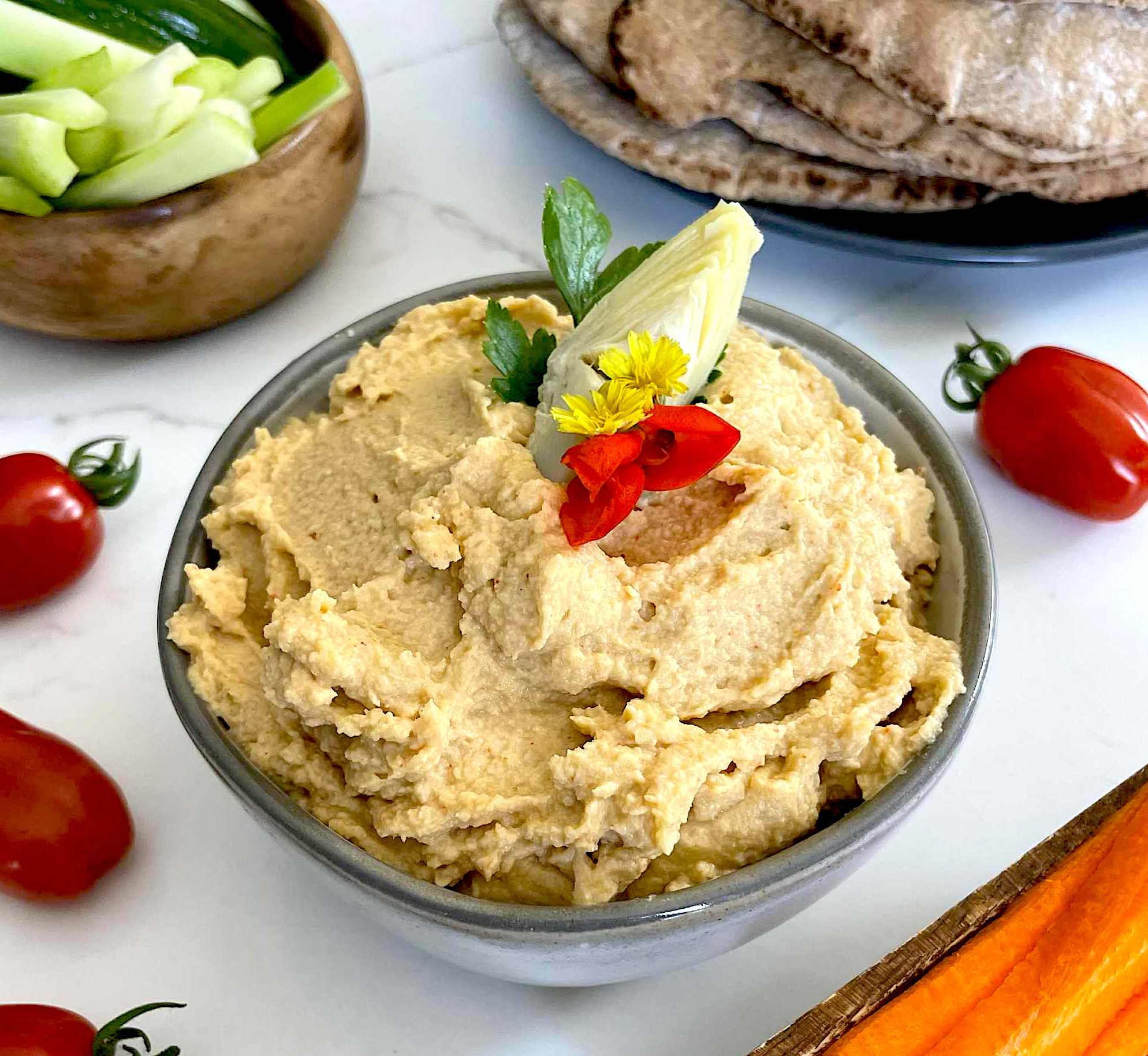
A subtle and satisfying blend of flavors that’s great in sandwiches, wraps or as a dip. Fiber rich artichoke hearts awaken the taste buds while white miso intensifies the creamy dippable umami goodness. Chickpeas, lemon juice, fresh garlic and tahini honor the Mediterranean traditions that inspired this recipe.
WHY I LOVE IT
Homemade hummus always tastes better than store-bought. That’s because fresh garlic and lemon juice make a world of difference. What’s even better than the unbeatable fresh taste of homemade hummus is that I get to be both creative and healthy. While hummus is the most famous dip in the world, artichoke dip is a North American classic. This recipe brings both dip concepts together. And the flavor combination makes sense—hummus is a traditional Mediterranean concoction and artichokes are a vegetable that’s native to the Mediterranean region. White miso helps all the flavors blend with a slightly sweet salty umami embrace that replaces oil. This recipe is Mediterranean inspired healthy vegan fusion at its best!

ARTICHOKE HEARTS OR BOTTOMS
You can use artichoke hearts or bottoms in this recipe and they can be canned, frozen, from a jar, or even freshly cooked. I used 3/4 cup of canned water packed artichoke hearts, which turned out to be a total of 8 artichoke hearts. The amount of artichokes doesn’t have to be exact. If you are whole food plant-based (WFPB) adherent and you’re using canned or otherwise preserved artichokes, make sure that they have been packed in water, not in oil. It’s impossible to rinse all the oil off marinated artichoke hearts and you’ll lose some of the flavor while trying. If you’re not WFPB adherent, then a little oil can get in the hummus and you don’t need to worry about it. Still, you should strain excess liquid from artichokes before measuring and adding them.
TAHINI AWESOMENESS
In my opinion, there’s no substitute for tahini in this, or any other, hummus recipe. Tahini is essential to the flavor profile of hummus. It’s even more important in whole food plant-based (WFPB) hummus recipes like this one where olive oil, an ingredient in traditional hummus, is left out. Due to its high fat content, people sometimes have trouble understanding that tahini is an acceptable ingredient in a WFPB adherent diet. But having fat doesn’t keep something from being a whole plant food. Avocados are a whole plant food, as are nuts and fresh coconut. All of these foods are also high in fat. Fortunately for fat gram counting WFPB adherent hummus lovers, a little bit of tahini goes a long way in hummus.
What exactly is tahini? Tahini is a paste made of whole ground sesame seeds. Many of us know it as a staple in traditional Middle Eastern cuisine, but historically it has also been used throughout the Mediterranean and parts of Asia. Today tahini is popular all over the world. Unlike oils which are extractions removed from whole plant foods and thus lower in nutrients, tahini is made from the whole sesame seed and is thus nutrient dense. In fact, you could say that tahini is a nutritional powerhouse. It’s a great source of calcium and contains protein, fiber, selenium, and more. Check the label and try to always get tahini that doesn’t have added oil though, because some brands do.
WHITE MISO
White miso, a fermented soybean paste, is a superstar ingredient in vegan fusion cooking. From a nutritional standpoint, white miso has many health benefits. It contains probiotics from the fermentation process, which can help support gut health and it’s rich in protein, vitamins, and minerals.
Adding white miso to hummus is a great way to level up the depth and complexity of a recipe without overpowering the other flavors. White miso is significantly more subtle than other types of miso due to shorter fermentation time. Its slightly sweet and salty taste complements the creaminess of tahini and the brightness of lemon juice. For an oil-free recipe like this one, white miso contributes to a luscious, creamy texture. While traditional hummus usually relies on olive oil for richness, white miso offers a similar mouthfeel without the added fats. This aligns with a whole food plant-based approach but also works for anyone looking for lighter, healthier alternatives. You get an indulgent experience while avoiding added fats.
If you can’t get white miso or you’re allergic to soy, that’s ok. This recipe still works without it. But you will probably want to use 1/4 tsp of salt in place of the miso or a little bit of tamari or coconut aminos. If soy allergies are the issue, chickpea miso exists and would probably work well in this recipe though I haven’t tried it. Red or brown vegan miso have a stronger flavor that may overpower this recipe. They may still work but try using less, like 1 teaspoon instead of 1 tablespoon. If you use a smaller amount of a different kind of miso, you may need to add salt.
GARLIC ALERT
My general attitude towards garlic is to recommend that people use as much or as little as they want. But because the garlic in this recipe is raw, some caution is required. Too much raw garlic can make hummus bitter. Garlic cloves vary a great deal in size, so another way to think about the amount of garlic needed for this recipe is that it should be somewhere in the range of 1/2 to 2 tablespoons, the equivalent of between 2 and 5 medium garlic cloves. It’s better to proceed with caution and not go crazy with your garlic. You can’t over process hummus, so if you taste your hummus and it’s not garlicky enough, you can always add more.
PROCESSOR OR BLENDER REQUIRED
For this recipe you will need to use a food processor or blender. A high speed blender is ideal for achieving a smooth, almost silky, hummus. If you don’t have a high speed blender the next best appliance for making hummus is a food processor. A traditional, not so powerful blender, can also work but may require some patience and a little bit of extra liquid. You can’t over process hummus so, whichever appliance you use, take your time and get it as smooth as possible.


related recipes you’ll love


Artichoke Hummus with White Miso Oil-Free

Equipment
- blender or food processor
Ingredients
- 1½ cup cooked chickpeas (one 15.5 oz can, strained)
- ¾ cup cooked artichoke hearts or bottoms (frozen or canned packed in water)
- juice of one lemon (or 2 to 5 Tbsp to taste)
- 2 to 5 cloves of garlic
- 2 Tbsp tahini
- 1 Tbsp white miso
- ½ tsp smoked paprika
Instructions
- Place all ingredients in the bowl of a food processor or blender and process until smooth.
- Artichoke Hummus can be stored for up to a week in a sealed refrigerated container.



Leave a Reply