
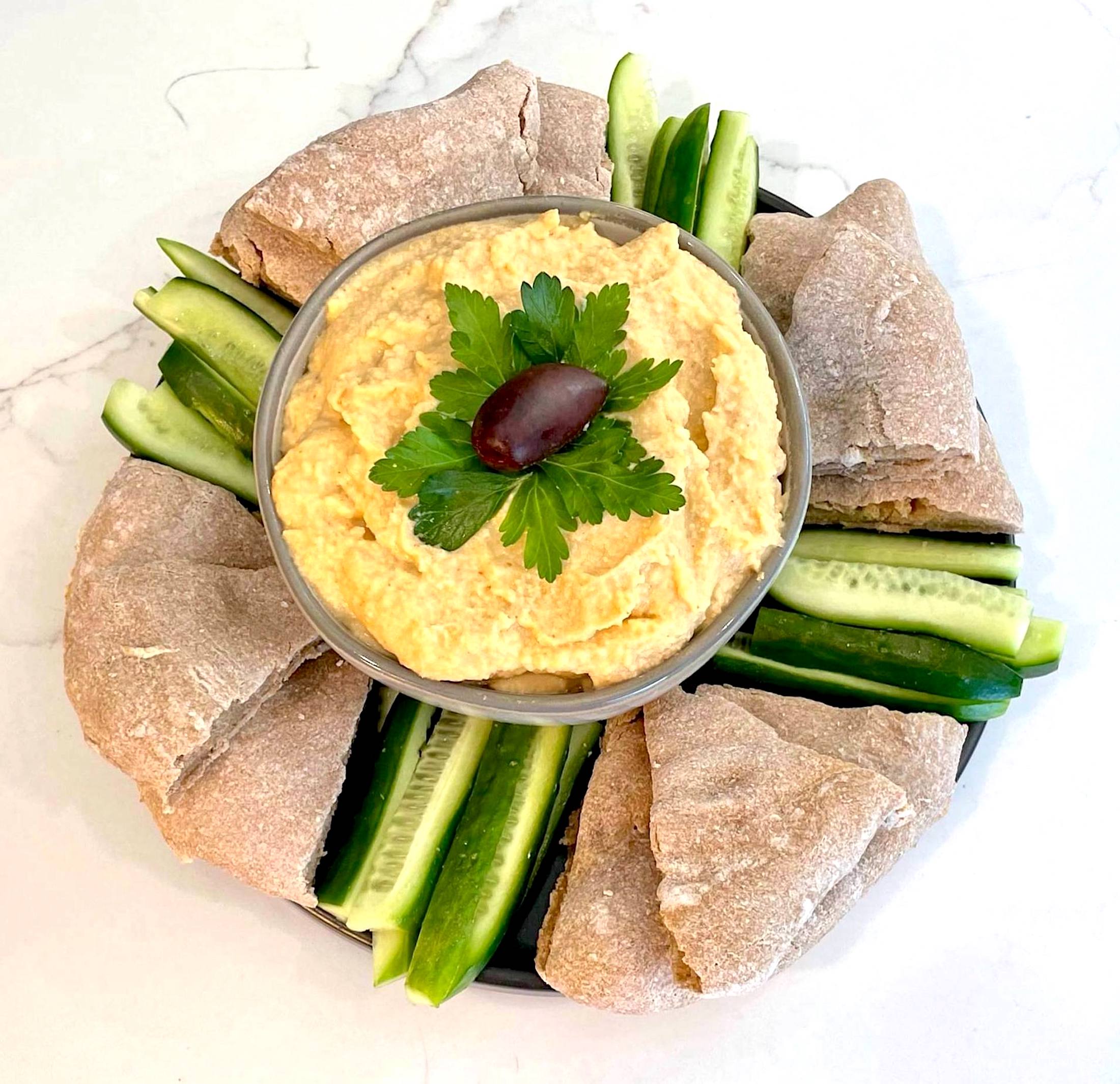
This flavor combination is simply sensational. A healthy oil-free hummus with a subtle corny sweetness that’s balanced by a generous splash of lemon juice. Corn hummus is the perfect dip during summer months when fresh corn is in season, but you can also make it year-round with frozen or canned corn.
WHY I LOVE IT
Homemade hummus is easy, economical, and always tastes better than store-bought. For those of us trying to do without oil, making our own hummus is usually the only way to go. But what I like best about homemade hummus is that I can be creative. In this recipe I’ve incorporated one of my favorite seasonal summer ingredients, fresh corn. The subtle sweet flavor of corn balances beautifully with the earthy Mediterranean flavor in traditional hummus—chickpeas, tahini, lemon and garlic. But don’t worry, if you fall in mad love with corn hummus, you can enjoy it year round by using canned or frozen corn instead of fresh. Whatever you do with traditional hummus, you can also do with corn hummus. Serve it as a dip, spread it on sandwiches, create a wrap or pipe it onto your pizza!

CORN KERNEL OPTIONS
When fresh corn is in season I prefer to use kernels from freshly cooked corn on the cob for this recipe. My favorite way to cook corn on the cob is oven baking the corn without removing the husk. You can also use uncooked corn kernels if you prefer. Frozen or canned corn kernels are also fine. You will need to partly or fully thaw frozen corn kernels before using them in this recipe. If using canned corn, drain kernels first and pat dry. The amount of corn kernels doesn’t have to be exact. A medium ear of corn has approximately 3/4 cup of kernels and a large ear of corn may have one cup or a bit more.
GARLIC ALERT
My general attitude towards garlic is to recommend that people use as much or as little as they want. But because the garlic in this recipe is raw, some caution is required. Too much raw garlic can make hummus bitter. Garlic cloves vary a great deal in size, so another way to think about the amount of garlic needed for this recipe is that it should be somewhere in the range of 1/2 to 2 tablespoons, the equivalent of between 2 and 5 medium garlic cloves. It’s better to proceed with caution and not go crazy with your garlic. You can’t over process hummus, so if you taste your hummus and it’s not garlicky enough, you can always add more.
LEMON JUICINESS
I love what a generous amount of lemon juice does to the balance of flavors in this hummus. The juice from a large juicy lemon, or anywhere from 3 to 5 tablespoons of fresh lemon juice, is the ballpark amount for this recipe according to my tastebuds. Personal preferences vary and less lemon juice is fine too. If you already know your lemons are small and not so juicy, you may need to get more than one to achieve the desired result.
TAHINI AWESOMENESS
In my opinion, there’s no substitute for tahini in this, or any other, hummus recipe. Tahini is essential to the flavor profile of hummus. It’s even more important in whole food plant-based (WFPB) hummus recipes like this one where olive oil, an ingredient in traditional hummus, is left out. Due to its high fat content, people sometimes have trouble understanding that tahini is an acceptable ingredient in a WFPB adherent diet. But having fat doesn’t keep something from being a whole plant food. Avocados are a whole plant food, as are nuts and fresh coconut. All of these foods are also high in fat. Fortunately for fat gram counting WFPB adherent hummus lovers, a little bit of tahini goes a long way in hummus.
What exactly is tahini? Tahini is a paste made of whole ground sesame seeds. Many of us know it as a staple in traditional Middle Eastern cuisine, but historically it has also been used throughout the Mediterranean and parts of Asia. Today tahini is popular all over the world. Unlike oils which are extractions removed from whole plant foods and thus lower in nutrients, tahini is made from the whole sesame seed and is thus nutrient dense. In fact, you could say that tahini is a nutritional powerhouse. It’s a great source of calcium and contains protein, fiber, selenium, and more. Check the label and try to always get tahini that doesn’t have added oil though, because some brands do.
PROCESSOR OR BLENDER REQUIRED
For this recipe you will need to use a food processor or blender. A high speed blender is ideal for achieving a smooth, almost silky, hummus. If you don’t have a high speed blender the next best appliance for making hummus is a food processor. A traditional, not so powerful blender, can also work but may require some patience and a little bit of extra liquid. You can’t over process hummus so, whichever appliance you use, take your time and get it as smooth as possible.


related recipes you’ll love


Corn Hummus Oil-Free WFPB

Equipment
- blender or food processor
Ingredients
- 1½ cup cooked chickpeas (one 15.5 oz can, strained)
- kernels from one ear of corn, cooked* or raw (approximately ¾ cup to 1 cup of kernels)
- juice from one large lemon (approximately 3½ to 5 Tbsp)
- 2 to 5 garlic cloves
- 2 Tbsp tahini
- ½ tsp smoked paprika
- ½ tsp sea salt or kosher salt
Instructions
- Place all ingredients in the bowl of a food processor or blender and process until smooth.
- Corn Hummus can be stored for up to a week in a sealed refrigerated container.
Notes
- Kalamata olives
- fresh chopped parsley
- homemade semi-dried tomatoes



Leave a Reply