
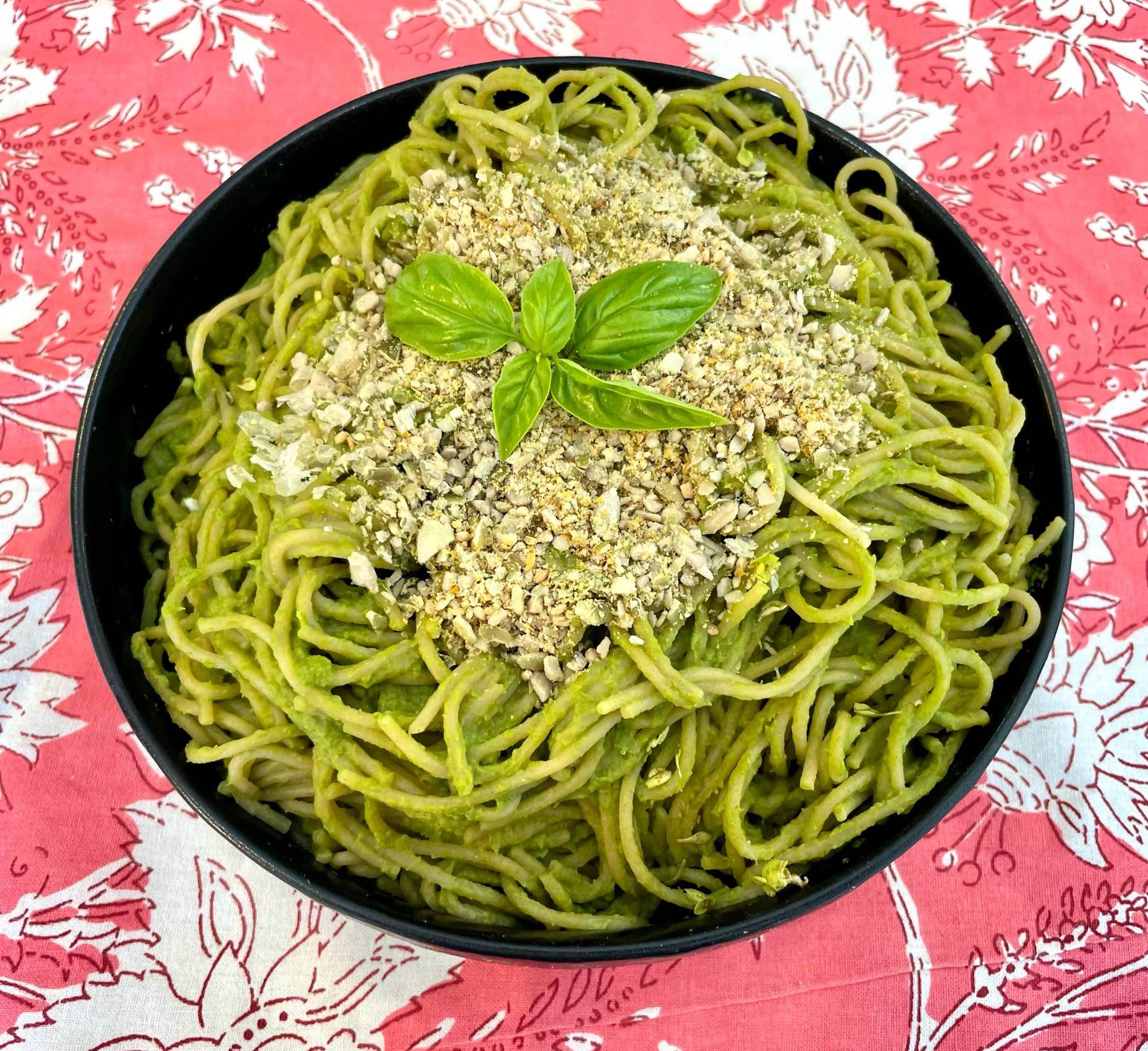
A soothing flavorful feast that’s as comforting as it is nourishing. This is a mellow, high protein, vegan pesto sparkling with citrusy lemon juice where cooked and raw ingredients unite in perfect harmony.
WHY I LOVE IT
This pasta satisfies my emotional and nutritional needs at the same time. I’ve always loved pesto, the traditional kind as well as its many non-trad variations. Nothing says comfort food to me like a bowl of pasta smothered in a mellow sauce. This pesto has it all. Beguiling, ethereal flavors—fragrant basil and garlic, peppery baby arugula, tangy lemon juice—rise over the sweet earthy foundation of creamy peas and caramelized onions. Making pesto that’s whole food plant-based (WFPB) compliant means finding a way to do without the oil and the cheese. The beauty of this recipe is that the combination of peas and oil-free caramelized onions delivers flavor to the tastebuds in a way that’s similar to oil and cheese while boosting the nutrient content well beyond that of any traditional recipe. Soaked cashews are an optional component. Cashews enhance the creamy impact and satisfying mouth feel, but the recipe also works without them. This is a recipe with elbow room. It can be adapted to personal preferences, dietary needs and the availability of ingredients.

YOUR CHOICE OF PASTA
You can use just about any kind of pasta in this recipe. I used a pound of dry thin whole wheat spaghetti and had pesto left over to freeze for another day. Fresh pasta is fine, any shape, and some of you may want to use gluten free. Whatever pasta you choose, I strongly recommend that you cook it according to the instructions on the package after you’ve prepared the sauce and the topping. Sauces can sit and wait for pasta, but pasta doesn’t do well when it sits around without sauce.
BLENDER OR PROCESSOR NEEDED
You need a blender or a food processor to make this recipe. A high speed blender is best because it makes the pesto very smooth and does so quickly. Blenders with motors of less than a 1000 watts can still work for this recipe but the process requires more patience.
WHETHER AND HOW TO CASHEW
LEAVING OUT THE CASHEWS, NO REPLACEMENT: Pre-soaked raw cashews give this pesto an extra creamy mouthfeel and add to the nutrient content of the recipe. But if you’re counting fat grams, limiting saturated fats, have nut allergies or if you simply don’t like or have cashews, you can leave them out. Replacing cashews with another ingredient is optional, not necessary.
REPLACING CASHEWS: If you’d like, you can replace soaked cashews with another ingredient. Here are some ideas for what to use instead of cashews in this recipe:
- 1/2 cup cooked white beans
- 1/2 cup tofu
- 2 tablespoons aquafaba
- 2 tablespoons tahini
- 1/4 to 1/3 cup pine nuts
NO TIME TO SOAK CASHEWS: For best results your cashews need to be soaked. Pre-soaked cashews make sauces creamier than unsoaked cashews. When using a high speed blender you can technically get away with little to no soaking. The result will be almost as good, but you have to be patient and process for longer. Ideal soaking time for cashews is at least two hours if starting with cold water. If you start by pouring boiling water over your cashews you can get away with a shorter soaking time. Any amount of soaking is better than no soaking. Using cashew pieces also reduces the total necessary soaking time. Whenever I get the chance to plan far enough ahead, I like to soak my cashews overnight.
USE OIL IF YOU WANT TO
If you like the overall concept of this recipe but prefer to sauté with oil, go ahead. The vegetable stock in this recipe is there as an oil substitute for sautéing, but if you choose to sauté with oil, you can either leave it out altogether or add a bit to at a time to your oil sautéing in order to build flavor.
EASY PEASY OIL-FREE SAUTÉING
For this recipe, I prefer to use vegetable stock for sautéing because it adds a layer of flavor and helps to caramelize the onions. But you can always use water instead.
Begin by heating 2 to 3 tablespoons of vegetable stock (or water) in a pot or skillet over high heat. Keep the rest of the liquid close at hand. When the liquid in the pot comes to a rolling boil, add chopped onions. Sauté for about 5 minutes or until the onions are translucent. Add little bits of liquid as needed to prevent onions from sticking. Reduce heat to medium-high and add the garlic and peas. Sauté an additional 2 minutes, adding a little liquid at a time and letting it boil down. The idea is for the onions to get a bit caramelized while the garlic and peas are just lightly cooked.


CRUNCHY SEED TOPPING
The crunchy seed topping is optional but delicious in this recipe. If you decide to make it, do so before blending the pesto. You can use the same blender or food processor that you plan to use to blend the pesto. By making the topping first you won’t need to clean and dry the blender or food processor between steps.
Usually I like to make this kind of topping in a food processor instead of a high speed blender, but because I don’t want to have to clean two different bowls, I chose to use a blender for both steps in this recipe.
Making this topping is quick and easy. All you have to do is put all the ingredients in your food processor or high speed blender and pulse. The only thing you have to watch out for is over processing and ending up with a buttery spread instead of a crunchy topping. It’s important to use your pulse function. You only need a few short pulses to achieve the desired result.


MAKING THE PESTO SAUCE
First gather up all the ingredients for the pesto. The cooked onion, garlic and pea mixture are now a single ingredient component.

No need to clean the bowl of the blender or food processor if you just used it to make the crunchy seed topping. Just pour out the seed topping and set aside. Then place all pesto ingredients in the blender or food processor bowl and process until smooth. Be patient and try to get the mixture as smooth as possible. Because my blender is fairly small, I have to add the greens in two parts or they don’t all fit. I like to process down the baby arugula first, then add the basil.


VARIATIONS
As I’ve already mentioned above, soaked cashews are optional. They can be left out altogether or replaced with several other ingredients. Here’s a list of other variations you may want to try:
- FRESH MINT: add a small handful of fresh mint leaves (this one’s my favorite)
- LEAVE GARLIC RAW: for a more pungent pesto, don’t cook the garlic
- REPLACE BABY ARUGULA: any leafy green vegetable works
- LIME: replace fresh lemon juice with lime juice
- REPLACE BASIL: try a different fresh herb or blend fresh herbs
- SEMI-DRIED TOMATOES: for a delicious flavor and color contrast garnish with homemade semi-dried tomatoes
related recipes you’ll love


Arugula Basil Pea Pesto Pasta with Crunchy Topping ~ Vegan ~ Oil-Free ~ WFPB

Equipment
- High Speed Blender or Food Processor
- Skillet or Pot (for sautéing cooked pesto ingredients)
- 5 to 6 Quart Pot (for cooking pasta)
Ingredients
For the Pesto Sauce
- ½ cup vegetable stock (for oil-free sautéing)
- 1 onion, chopped
- 5 to 12 garlic cloves, coarsely chopped (garlic is personal, use as little or as much as you like)
- 1 cup peas, fresh or frozen (frozen peas don't need to be thawed)
- Juice from 1 large lemon (about 3 Tbsp)
- 2 cups fresh basil leaves
- 2 cups baby arugula
- ½ tsp salt
- ⅓ cup cashews, pre-soaked (OPTIONAL) (measure first, then soak)
Pasta
- 1 lb dry pasta, any type (or 1½ lb fresh pasta, any type)
For the Crunchy Seed Topping (optional)
- ¼ cup pumpkin seeds (aka pepitas)
- ¼ cup sunflower seeds
- 2 Tbsp nutritional yeast
- 1 Tbsp sesame seeds (any type)
- ½ tsp garlic powder
- ½ tsp coarse sea salt or kosher salt
- ¼ tsp ground black pepper
Instructions
Prepare Cooked Pesto Ingredients
- Pour 2 to 3 tablespoons of vegetable stock into a skillet or pot and bring to a boil over high heat keeping the remaining stock close at hand.
- When the stock starts to boil, add the chopped onions and sauté for for about 5 minutes or until onions are translucent. Add small amounts of stock as needed to keep onions from burning or sticking.
- Lower heat to medium-high and add the garlic and peas. Sauté for another 2 to 3 minutes adding small amounts of stock as needed.
- Remove cooked onions, garlic and peas from the skillet placing them on a plate or in a small bowl. Set aside and allow to cool a bit.
Prepare Crunchy Seed Topping (optional)
- You can make this topping in the food processor or blender you're planning to use for processing pesto. Place pumpkin seeds, sunflower seeds, nutritional yeast, sesame seeds, garlic powder, coarse salt and pepper in the bowl of food processor or blender. Pulse until you achieve a desired consistency. Very few pulses are needed. Be careful not to over pulse or you end up with a kind of nut butter. You only need a few short pulses to achieve a texture similar to coarse sand.
- Remove the crunchy seed and nut topping from the food processor or blender and into a bowl or other container. Set aside.
Create Pesto Sauce
- If you chose to make the crunchy seed topping, you don't need to clean the bowl of your processor or blender. Place cooked onion, garlic and pea mix in the blender or food processor along with baby arugula, basil leaves, lemon juice, salt and cashews (if using). Process until completely smooth.
- Depending on the size of your blender or food processor, you may need to process some of the ingredients down before you can fit all the ingredients.
Cook the Pasta
- Cook the pasta according to the directions on the package.
- Strain pasta then return it to the pot.
- Add about half the pesto to pasta in the pot and toss until evenly distributed. Decide how much more pesto to add pasta according to your personal preference.
- Leftover pesto can be stored in the fridge or frozen in an airtight container.
Combine and Serve
- Add pesto pesto to pasta in the pot and toss until all pasta is evenly coated with sauce.
- Serve immediately.
- If you've chosen to make the crunchy seed topping you sprinkle it over each serving.
Storing
- Although this dish is best served immediately, you can also store it in a sealed refrigerated container for up to a week.
- I haven't tried freezing this pasta, but that would probably work. If you're planning to freeze this pasta dish, I recommend that you slightly undercook the pasta.
- You can make the pesto sauce ahead of time and store it in a sealed refrigerated container for up to 5 days or in the freezer for 3 to 6 months. You can also make the crunchy topping ahead of time and refrigerate or freeze it in a separate container from the sauce for even longer.



Leave a Reply to JetCancel reply