
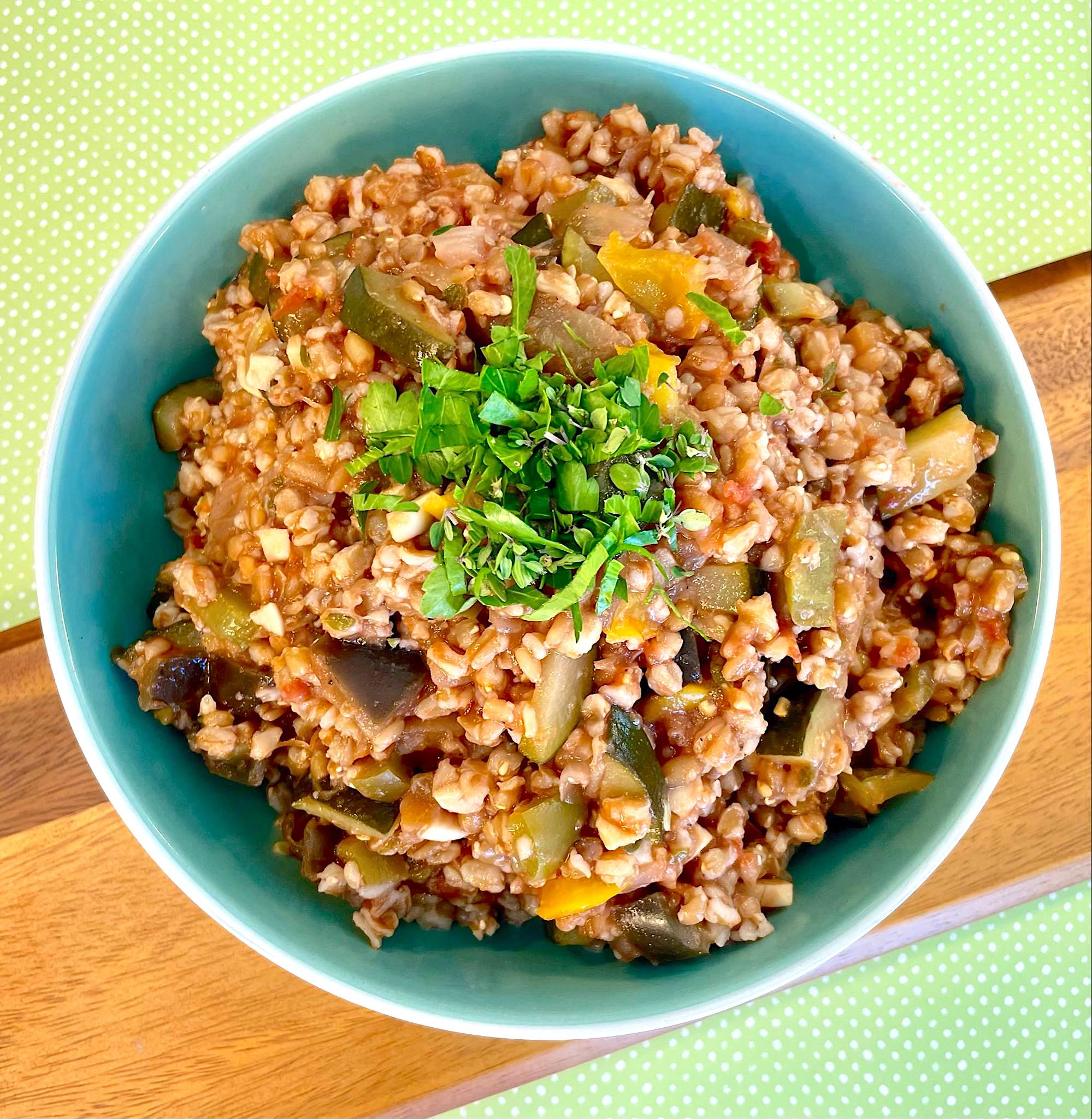
This hearty oil-fee grain forward dish was inspired by ratatouille, a classic Southern French summer vegetable stew. Farro adds a satisfying whole grain chewiness to the ratatouille flavor experience in this flexible recipe that also works with barley and other grains.
WHY I LOVE IT
Ratatouille niçoise is a traditional Southern French vegetable stew which is typically vegan. The idea behind traditional ratatouille is to blend together vegetables from the Mediterranean summer harvest—eggplant, zucchini, bell, peppers and tomatoes—into a hearty and satisfying stew that’s flavored with garlic, onions and herbs. I love making ratatouille when summer vegetables are at their peak. In this dish, the ratatouille medley of garden fresh flavors and textures form the perfect backdrop to the rustic goodness of farro, an ancient Mediterranean grain. Flavoring grains and pastas with my homemade batches of ratatouille is something I’ve been doing for a while. What’s new for me is leaving out the olive oil and creating layers of flavor through the use of vegetable stock as a replacement for oil. I also veer from tradition by using canned tomatoes instead of fresh. This saves time and helps me achieve a kind of sauciness that’s great for spreading the flavor onto the farro.

MAKE IT YOUR OWN
This is a flexible recipe that can be adjusted to personal preferences. Exactly how much zucchini you use is up to you, or maybe you’d like to replace zucchini with summer squash. The bell peppers can be any color in any combination. Go with basil instead of thyme, or use a combination of herbs. I used a 14.5 oz can of crushed tomatoes, but the same amount of stewed or diced tomatoes would also work. Fire roasted canned tomatoes are also a great option. Red onions, white onions, sweet onions or just plain yellow, all work! Barley is always a great substitute for farro, but other whole grains would also be good. Or you could go a more processed route and make this recipe using cooked orzo. The quantity of vegetable stock you need is somewhere between 1 to 2 cups, and will depend on the juiciness of the vegetables you’re using and how soft you want them to get.
CUBED VS SLICED
Once again, this recipe is flexible and will work regardless of how you choose to cut your vegetables. For this dish I like all my vegetables to end up in similarly sized pieces. With that goal in mind, I cut my eggplant and zucchini into cubes that are approximately three quarters of an inch. I think little chunks look nice in the context of a grain bowl, but if you prefer to slice your eggplant and zucchini, that’s fine too.
HERBS FOR RATATOUILLE
Many different herbs would be good in this recipe. A combination of more than one herb can also be lovely. Basil along with thyme is particularly nice. I have fresh thyme in my garden and enjoy it in this recipe, but if you want to use dried thyme that’s fine. The general rule is that dried herbs can be added early in the cooking process and fresh herbs should be added at the end. In my opinion, fresh thyme is an exception to this rule. Thyme leaves are quite tough and benefit from being cooked for a while. If you decide to use a different fresh herb such as basil, oregano, parsley or tarragon, you should add it during the final step of the recipe when you incorporate the cooked farro. Be careful not to overdo the herbs. I added way too much flat leaf parsley to this recipe once and pretty much ruined the whole thing. It’s always best to add a little, do a quick taste test, and then decide if you want to add more.
WHEN TO COOK YOUR FARRO
This recipe calls for cooked farro. If you want to cook your farro well in advance that’s fine. Cooked farro can be kept in the fridge in a sealed container for several days. Another option is to start cooking farro while you prepare the other ingredients. Follow the instructions on the package of the farro you have. Unhulled farro usually takes a bit longer to cook than pearled farro.
EMBRACING OIL-FREE SAUTÉING
It took a while for me to embrace the idea that you can sauté your food without using any oil by substituting oil with a much larger quantity of liquid such as water or vegetable stock. Even when I was already completely on board with the whole food plant-based lifestyle philosophy, I felt like being 100% oil-free was for people who had non-stick pans, not for someone like me who prefers cast iron skillets and ceramic pots. So for a long time I kept using little bits of oil at the beginning of my sautéing process and then adding small amounts of water when things began to stick. Over time I’ve realized that that little bit of oil at the beginning is not really necessary. In fact, if you want a teaspoon or two of oil because you love the flavor of certain oils (think extra virgin olive oil or toasted sesame oil), you’ll get much more flavor from your oil if you use it as a finishing oil in the final step of the recipe than at the beginning when you’re heating it up.
SAUTÉING WITH VEGETABLE STOCK
For this recipe, I prefer to use vegetable stock for sautéing, not water, because I think the added flavor boost from the stock is important. I like to have one to two cups of stock on hand right next to my pot so I can add a little at a time as needed.
Although this is a recipe where eventually most of the ingredients are simmered together for an extended amount of time, I still like to sauté the onions first until they become transparent in order to build flavor through caramelization. And yes, caramelization still happens when you’re sautéing without oil. All other vegetables including garlic, but not including the canned tomatoes, are added during the next step.
To sauté vegetables using stock, begin by pouring approximately three tablespoons of stock into a large pot or Dutch oven and bringing it to a rolling boil over high heat. Keep more stock close at hand. Add the onions and sauté for about 6 minutes until translucent. Whenever you see that the onions are starting to stick to the pan add a little bit more stock. Once the onions are translucent, add the other vegetables and continue to sauté until the zucchini and eggplant are soft all the way through, adding little bits of stock as you go to prevent sticking. This can take anywhere from 10 to about 20 minutes. I like my ratatouille veggies very soft so I spend quite a bit of time on this step.


FINAL STEPS
Once the vegetables are as soft as you want them, add the canned tomatoes, agave syrup (optional), and thyme, if that’s the herb you’ve chosen to use. Other, more delicate, fresh herbs would need to be added towards the end. Sauté another 5 to 10 minutes until you have a fairly thick stew. Finally add the cooked farro, combine with stew, and season with salt and pepper to taste.


GARNISHES AND VARIATIONS
- GARNISH WITH CRUNCHY WFPB PARMESAN-LIKE TOPPING: My own favorite way to enjoy this dish is to generously sprinkle each serving with my homemade Crunchy Parmesan-Like Seed and Nut Topping. This topping adds protein as well as another layer of flavor and texture. And it can be made tree nut free if necessary.
- USE A DIFFERENT GRAIN: When it comes to using a cooked grain other than farro, my top picks would be barley or wheat berries. Quinoa would be a good gluten-free option. If you’re not being strict about using only whole grains, orzo would be an excellent choice.
- ADD OLIVES: Olives, particularly pitted Kalamata, sliced or whole, are a flavorful addition in keeping with the Mediterranean theme of the dish. If you want to use olives, fold them in at the end after you’ve added the cooked farro.
- ADD CHICKPEAS: Adding chickpeas is a delicious high protein option that’s also consistent with a classic Mediterranean ingredient repertoire. You can add cooked chickpeas when you’re adding the cooked farro. Crunchy roasted chickpeas would be especially good in this dish.
related recipes you’ll love


Ratatouille Farro Oil-Free WFPB Vegetable Stew

Equipment
- Large Cooking Pot or Dutch Oven (6 to 7 quart is ideal)
Ingredients
- 1 to 2 cup vegetable stock (you may not use all of it)
- 1 onion, chopped
- 5 to 8 garlic cloves, minced
- 1 eggplant, cubed
- 1 zucchini, cubed
- 2 bell peppers, chopped (green or any color combination)
- 1 can, 14.5 oz crushed tomatoes (petite diced or stewed are fine too)
- 1 tsp agave, or substitute with sugar or maple syrup (optional)
- 3 Tbsp fresh or dry thyme leaves* (other herbs work too)
- 5 to 6 cups cooked farro
- salt and black pepper to taste (optional)
- Crunchy Parmesan-Like Seed and Nut Topping for garnish (optional)
Instructions
- Pour about 3 tablespoons of vegetable stock into a large pot and bring to a boil over high heat keeping the remaining stock close at hand.When the stock starts to boil, add the onions and sauté for about 6 minutes or until onions are translucent. Add small amounts of stock as needed to keep onions from burning or sticking.
- Bring heat down to medium high and add the garlic, eggplant, zucchini, and bell peppers. Sauté for vegetables for approximately 15 minutes until the eggplant and zucchini are soft all the way through, adding stock a little bit at a time to keep vegetables from sticking. Just how much to cook your ratatouille vegetables is a matter of personal preference. I like mine very soft.
- When your vegetables are cooked to your liking, add the canned tomatoes, agave (if using) and thyme leaves.*Cook mixture for another 5 to 10 minutes until you have a fairly thick stew.
- Add cooked farro to the pot and mix it with the stewed vegetables.
- Season with salt and black pepper and serve.
- SERVING SUGGESTION: Top each serving with a generous sprinkling of Crunchy Parmesan-Like Seed and Nut Topping


Leave a Reply