
Tomato powder is a cost effective shelf stable tomato paste alternative that works as a versatile seasoning. When used in small quantities it boosts umami flavors in savory vegan recipes without making them noticeably tomatoey. It can also do wonders for oil-free plant-based roasting.
WHAT IS TOMATO POWDER?
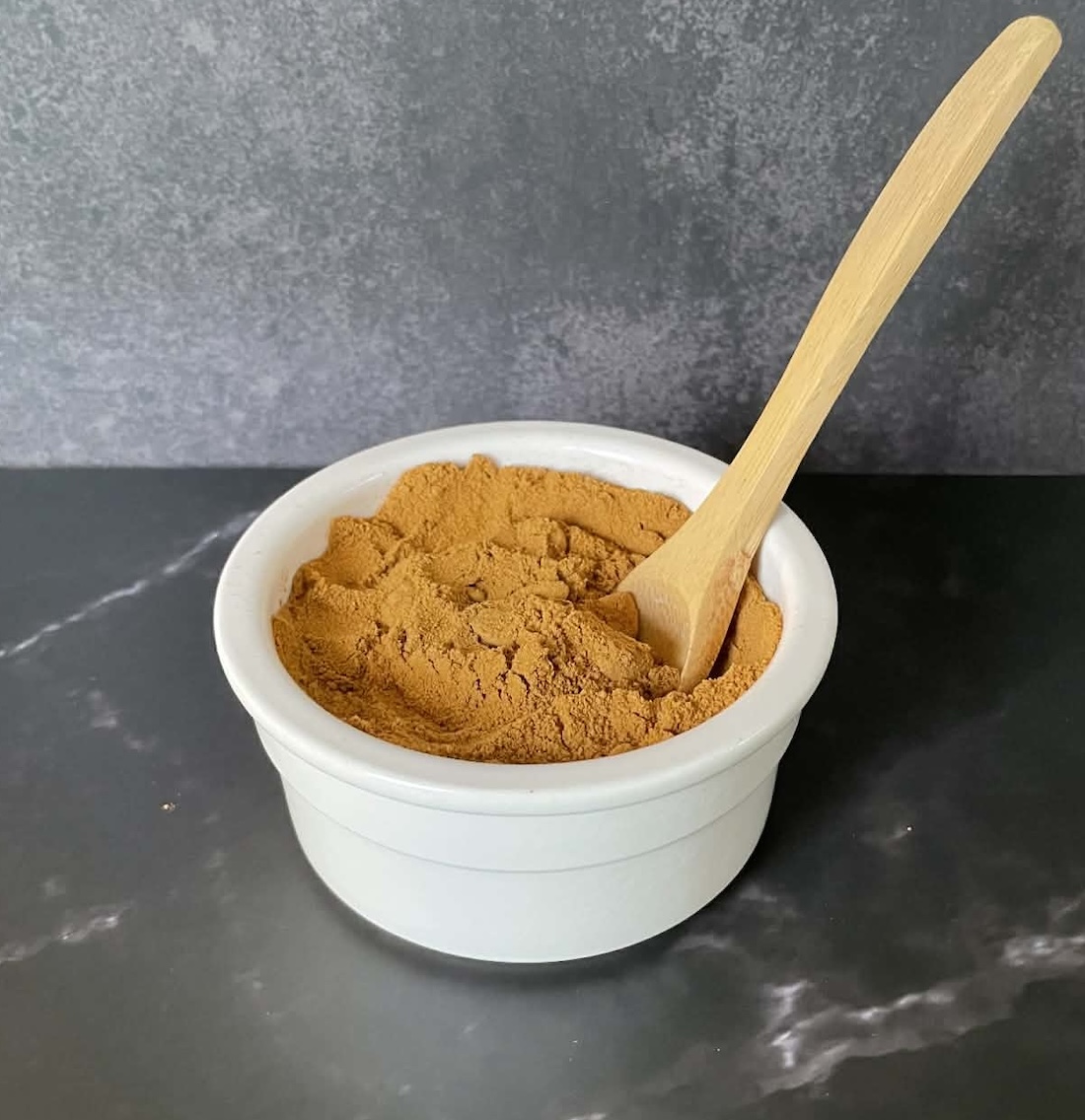
Tomato powder is a relatively modern industrial invention rooted in ancient dehydration techniques in which a concentrated form of dehydrated tomatoes is created by removing the moisture content from the fruit, then grounding it into a fine powder. The color of tomato powder can range in color from deep red to orange-red, or even brown, depending on the drying temperature and tomato variety. Tomato powder is essentially tomato paste in a dry powdery form. It is shelf stable, meaning that it can be stored in your pantry almost indefinitely. And yet the flavor impact of tomato powder is not exactly the same as tomato paste. It has a distinct umami quality all its own.
NUTRITIONAL BENEFITS
The nutritional profile of tomato powder is similar to that of tomato paste including vitamins A and C, antioxidants in a form that’s more concentrated than it is in fresh or canned tomatoes. Essentially, it’s a nutrient-dense seasoning.
HOME COOKING VERSATILITY
Tomato powder is an extremely versatile ingredient that can compliment many different cuisines and dietary preferences. It can be used as a seasoning in soups, sauces, marinades, and rubs. Sometimes it’s even used as a natural coloring agent. You don’t need to be plant-based or vegan to benefit from the versatility of tomato powder. As an ingredient, it’s especially convenient for home cooks because it allows you to add very small amounts of tomato flavor without the need for fresh tomatoes or opening a can of tomato paste when you only want a small amount. If you need a bit of tomato-like pizazz without getting too tomatoey, then tomato powder is actually superior to fresh or canned tomatoes. When used sparingly, tomato powder is quintessentially subtle.
A PLANT-BASED UMAMI BOOST
Let’s face it, creating an umami-packed plant based flavor experience is challenging. Animal muscles contain glycogen, proteins, and fats. When browned, these elements act as precursors to savory flavor. If you think that many vegan and plant-based dishes are umami-deficient, you’re right. But it doesn’t have to be that way. There are plant-based ingredients and cooking techniques that are equally effective at building umami and tomato powder is one of them. With its high concentration of glutamate, one of the primary amino acids responsible for savory flavor, tomato powder is an easy and subtle way to add a layer of complexity to almost any savory recipe. A small amount can go a long way. As little as two teaspoons of tomato powder in a large pot of soup can make a notable difference.

TOMATO POWDER IN OIL-FREE COOKING
One of the greatest challenges of oil-free plant-based cooking is how to brown and caramelize naturally low-fat plant foods without relying on oil. When used as part of a rub or seasoning mixed for roasting plant-based foods, tomato powder helps create a layer of slightly caramelized texture without the need for added oil.
To understand how this works remember that tomato powder is made with dehydrated tomatoes. As tomatoes are dehydrated, their natural sugars are condensed. When these natural sugars are exposed to dry heat they caramelize much faster than they would if they were part of a wet ingredient such as tomato paste. But caramelization, which is all about the sugars, is only part of the story. There’s also the Maillard reaction which involves proteins. The Maillard reaction is a partly caramelized umami-rich browning in which sugars and proteins work together. Aside from having concentrated amounts of natural sugar, tomato powder contains highly concentrated natural glutamates, a naturally occurring amino acid that acts as a building block for proteins.
A perfect example of this process can be found in my recipe for oil-free roasted soy curls with Middle Eastern seasonings where the glutamates in the tomato powder drive the Maillard reaction, yielding a deep, savory, meat-like crust.

FINAL THOUGHTS
I didn’t start this post with my own story about how I discovered tomato powder because I’ve been trying to be all business and get to the point, but here it is. My introduction to tomato powder was through a vegan meal kit delivery service that I used during a very busy period of my life about three years ago. Tomato powder was included as an ingredient for several sauces and one of the soups. As an experienced cook and passionate foodie, I immediately noticed that this new-to-me ingredient was doing something different in these recipes than what the results would be if I were to use a comparable amount of tomato paste. There was something so subtle and warm about it, and it played well with other ingredients, never overpowering the flavor profile. When life got less busy and I was back to cooking for myself I ordered 8 ounces of tomato powder and started experimenting with it and quickly got hooked. It’s just a great pantry staple that’s affordable and practical. My own journey into the possibilities of this ingredient is only getting started.



Leave a Reply