
What is tahini and what do you do with it?
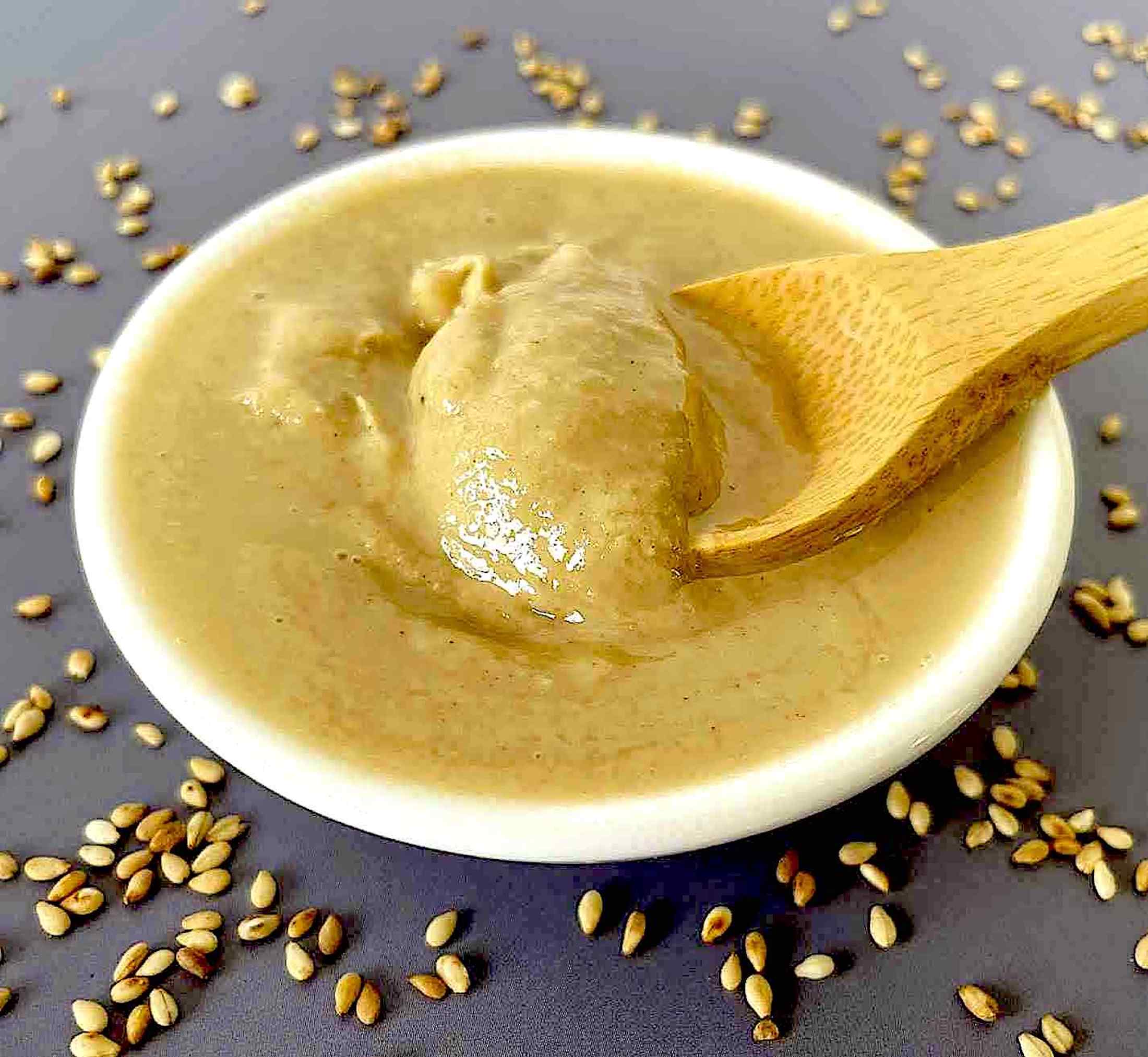
Tahini is a paste made from ground sesame seeds. Many of us associate tahini with Middle Eastern cuisines. And although it’s certainly a popular ingredient in that region, it has also historically been part of the culinary traditions of the Mediterranean and many parts of Asia. Today tahini is popular all over the world.
Most tahini is made with a single ingredient—sesame seeds. Because it is a minimally processed food product made from a whole plant food, tahini is considered to be acceptable in a whole food plant-based (WFPB) dietary practice.
Tahini is a versatile, nutrient dense, ingredient that tastes great on its own as a spread, and can also be used as a substitute for oil or nut butters in a variety of recipes. Or simply throw a little tahini into sauces, smoothies, cookie doughs, cake batters, or salad dressings to add a creamy nutty flavor and boost nutrients.
But what about tahini’s high fat content?
Writ large, a whole food plant-based approach to nutrition is about sticking with whole, or minimally processed, plant foods that have had no good things taken away and nothing bad added to them. A whole food plant-based dietary practice is not synonymous with a low fat diet. That’s because many whole plant foods are also high in fat. Avocados, coconut, cashews, and pumpkin seeds are all examples of whole plant foods that are also high in fat. Still, in order to optimize health outcomes on a whole food plant-based diet, it’s generally recommended that high fat plant foods be limited.
People who follow a whole food plant-based dietary practice are sometimes doing so because they have specific health goals which require close monitoring of fat intake. Some may be trying to lose weight and/or lower cholesterol levels. Others may be seeking to reverse heart disease or type 2 diabetes. These folks may need to severely restrict their consumption of all high fat plant foods including tahini. This doesn’t necessarily mean that tahini is always excluded from diets that restrict fat grams. When tahini makes up a small part of a recipe, and it usually does, the difference in added fat grams per serving can be very small.
Nutritional Benefits of Tahini
Tahini offers a broad range of nutritional benefits:
- Vitamins and Minerals: Tahini’s packed with vitamins, and minerals. It’s particularly high in calcium, magnesium, and iron.
- Contains Healthy Fats: The majority of the fat in tahini is unsaturated fat, including both monounsaturated and polyunsaturated fat which are considered to beneficial for heart health.
- Plant-Based Protein: Tahini is a good source of plant-based protein.
- Contains Fiber: Tahini is a good source of fiber because it is made from whole sesame seeds. All of the fiber in sesame seeds is still there.
- Contains Antioxidants: Sesame seeds contain antioxidants, such as sesamolins and sesamin, which can contribute to overall health.
Is tahini healthier than oil?
Yes! And if we compare the nutrient content of tahini to the nutrient content of oil derived from the same ingredient, it’s easy to understand why.
Oils are usually excluded from whole food plant-based (WFPB) dietary practices. The primary reason for not including oils is that oils are highly processed foods. It’s not about removing fat from your diet, it’s about consuming plant foods that are as whole as possible and as minimally processed as possible.
Since tahini is made exclusively from sesame seeds, let’s do a volume-to-volume nutritional comparison of sesame seeds, tahini, and sesame oil.
2 tablespoons of whole dry sesame seeds:
- 105 calories
- 6.8 grams of fat
- 2 grams of fiber
- 3.2 grams of protein
- rich source of vitamins and minerals
2 tablespoons of tahini:
- 178 calories
- 16 grams of fat
- 2.8 grams of fiber
- 5.2 grams of protein
- rich source of vitamins and minerals
2 tablespoons of sesame oil has:
- 240 calories
- 28 grams of fat
- 0 grams of fiber
- 0 grams of protein
- trace, or small, amounts of some vitamins and minerals
There you have it. The whole food plant-based contingent isn’t just trying to be difficult by favoring unprocessed ingredients like sesame seeds, or minimally processed ingredients like tahini, over highly processed ingredients like oil. Highly processed ingredients are almost always more calorie dense and have a lower nutrient content than their unprocessed, and minimally processed, counterparts. Oil just happens to be a prime example of a highly processed ingredient. An important part of the difference in nutrients is the fiber content. Fiber is essential to a healthy gut biome and helps our bodies regulate blood sugar. It also helps us feel full after we eat. Most people living in developed countries don’t get adequate amounts of fiber because a large portion of their calories come from foods that contain little to no fiber. This includes all animal derived foods which contain no fiber at all.
Using Tahini as an Oil Substitute
Tahini can be a flavorful substitute for oil in recipes for dressings, marinades, and sauces. And it can sometimes even work as an oil substitute in baking. When it comes to creating a rich creamy spread or salad dressing tahini is simply amazing. Traditional hummus is usually made with olive oil as well as tahini, but so long as there’s still some tahini in there, it’s every bit as awesome without the olive oil.
The tahini for oil substitution in marinades not only works, it adds a layer of flavor and texture that you simply can’t get with oil. A perfect example for this is the marinade in my recipe for garlicky roasted broccoli.
Keep in mind that using tahini as a substitute for oil may require slight adjustments to other ingredients in order to achieve the desired results in a recipe. Tahini is a paste, not a liquid, so it’s thicker than oil. Many recipes use tahini together with an added liquid ingredient like aquafaba, lemon juice or water.
Also keep in mind that tahini is not an appropriate substitute for oil in all cases. For oil-free sautéing water or vegetable stock is the best oil substitute (browse recipes with oil-free sautéing here). Similarly, tahini is not an adequate oil substitute when oil is being used to keep baked items from sticking to a pan. The best way to bypass the need for oil as a way to stick-proof baking pans is to use parchment paper sheets or pre-formed liners. Sometimes pans can be dusted with a starch such as flour or cornmeal as a way to keep foods from sticking.

Tahini as a Substitute for Nut Butters
The problem with nut butters is that nuts are common allergens. Sesame allergies are less common than tree nut and peanut allergies, so substituting peanut butter and nut butters with tahini can make recipes more inclusive. Sunflower seed butter is also a great nut butter substitute but, depending on where you live, it can be harder to find than tahini. This is especially true if you’re whole food plant-based and need to find sunflower seed butter that doesn’t have sugar in it. A nice thing about tahini is that it’s never going to have sugar in it or any other fillers that are frequently added to nut and seed butters.
In some parts of the world tahini is spread on bread in the same way that Americans spread peanut butter. It can even be used to make tahini and jelly sandwiches. Or how about tahini banana toasts? Or tahini blueberry rice cakes? The possibilities are endless!
Tips for Storing Tahini
You don’t absolutely need to refrigerate tahini before or after opening a container. But storing tahini in the fridge once a container has been opened is a good idea as it greatly extends the shelf life. Like many varieties of natural peanut butter, the oil in tahini separates and floats to the top of the jar. It can be a hassle to stir the oil back into the tahini every time you use it. Fortunately there’s a hack for the oil issue: store your tahini in an upside down jar in the fridge. The oil doesn’t separate as much when it’s in the fridge. And when the tahini oil separates a bit in an upside down jar, the oil floats up to what becomes the bottom of the jar when you’re ready to open it. I like to protect my fridge from possible oily leakage by wrapping a piece of plastic around the lid of the jar and securing it with a rubber band.



Leave a Reply